
I’m sure we all know the proverb “Give a man a fish and you feed him for a day. Teach a man to fish and you feed him for life.” Induction is how you bring new staff into your organisation. It can last minutes or months. It can motivate or suppress. And it can mean the difference between having to constantly “feed” your team with knowledge and training, or enabling your team to feed itself.

Induction is where organisational change can begin
The major difference between organisations that have adopted the Process Approach and those that haven’t, with respect to induction, is that the former tend to impart empowerment and self-reliance from day 1, and the latter tend to impart helplessness (while believing they are educating).
The difference is as simple and as complex as “this is how you do it” versus “this is how you learn how to do it”.
Induction in the Process Approach does not solely teach people how to perform their duties. And the reason for this is that if your organisation solely teaches inductees how to do perform their duties, then every time their job role alters, they have to be taught again. So by teaching people how to do tasks, you are embedding a cultural helplessness into your organisation where everybody is reliant on spoon-fed training to develop.
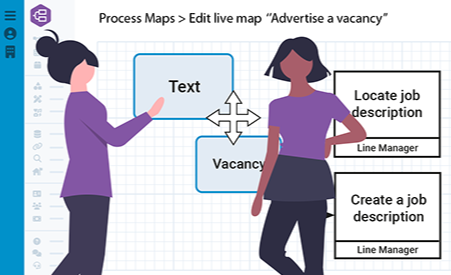
The alternative is to focus heavily on the resources your organisation supplies to its staff to enable them to learn for themselves.
And this is where it starts to get good… because if everyone is learning from the same set of resources, rather than for example the instructions of the last person that did the job, then to improve your organisation, you simply have to improve the resources!
Skills training is of course a vital component of staff induction. In organisations that adopt the Process Approach however, it is a component of induction. In many other organisations it is the entire induction.
The Tube Map
The analogy of the London Tube Map again works perfectly. A complete novice on the tube is trying to get from Paddington to let’s say Marble Arch. And they ask you for help.
You could say:
“Take the Bakerloo line to Oxford Circus then take the Central line to Marble Arch”.
You have taught them a skill. They now know how to get from Paddington to Marble Arch. But you haven’t taught them how to undertake any other journey.
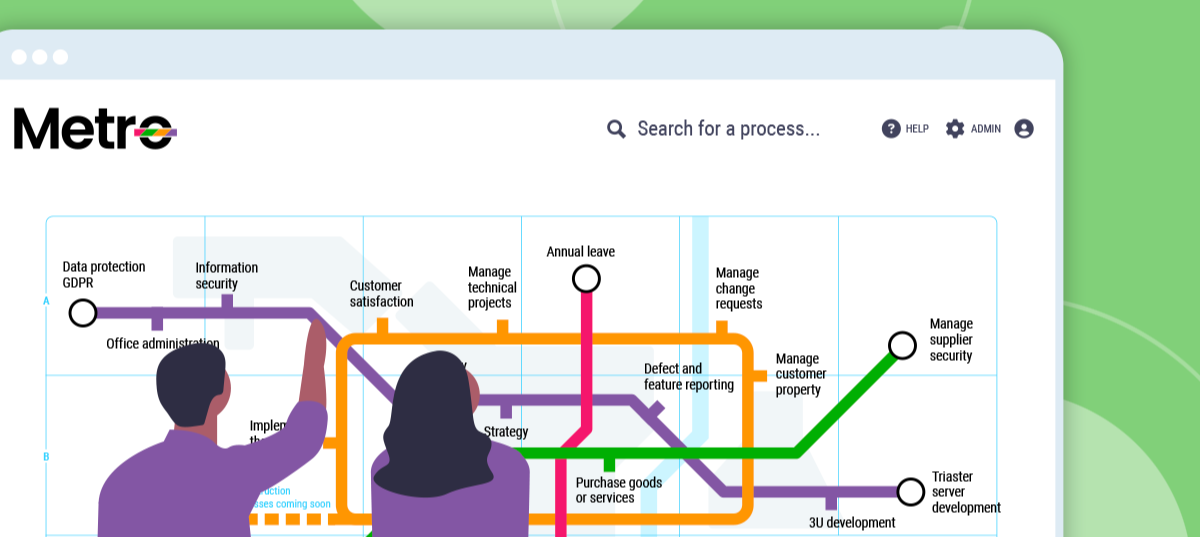
Or, (and if you practice the Process Approach you probably would!), you could say:
“Let me show you this Tube Map because if you know how to use the map, then you know how to get to anywhere from anywhere.”
The Process Library
… is the equivalent of the Tube Map.
It is the reference source and repository for all the information an individual requires to be able to perform their work as efficiently and as effectively as possible.
It is the single source of truth for your organisation.
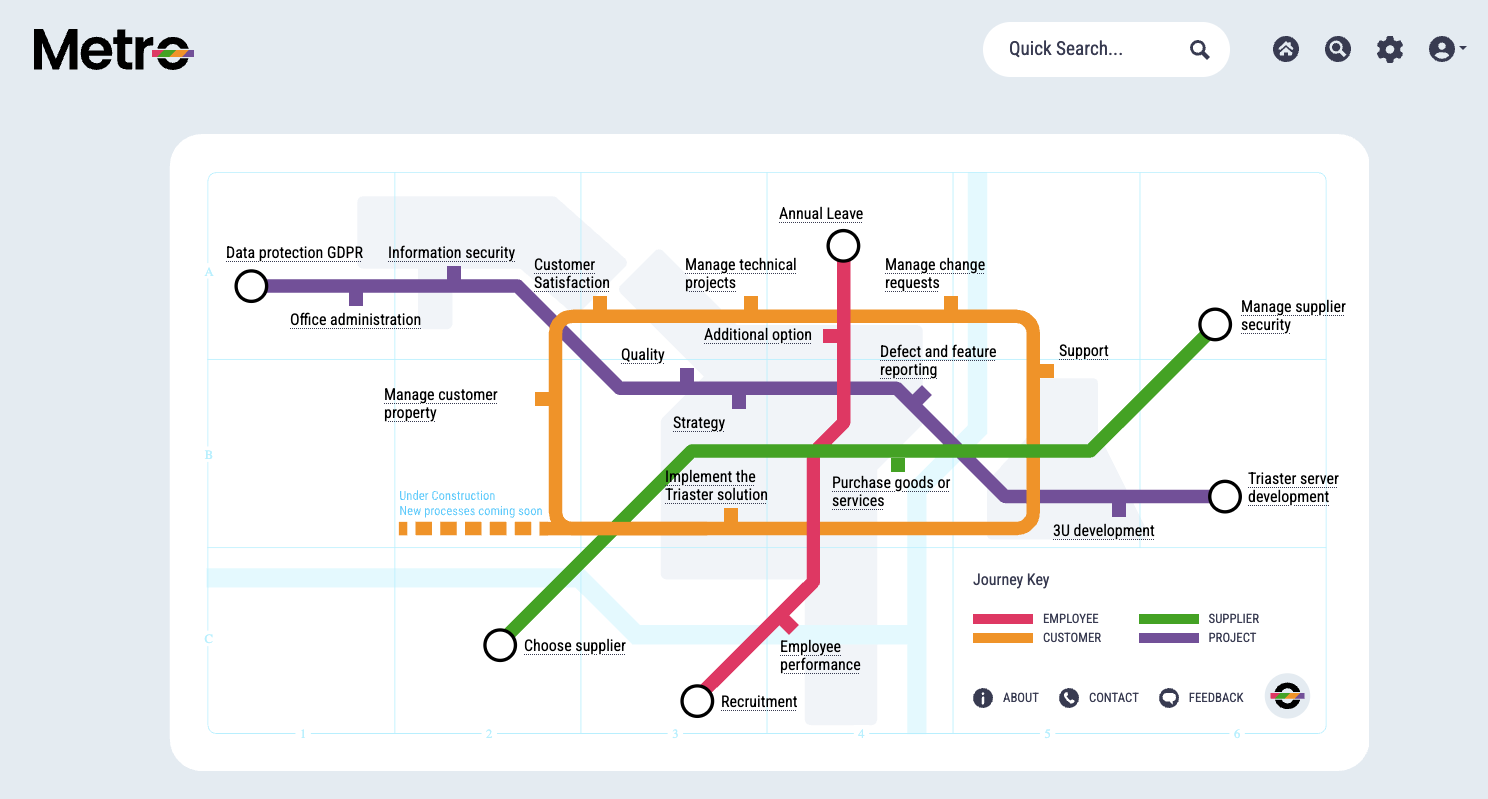
It is a common vocabulary for describing “how to get things done around here” that can be used by Finance, Marketing, Sales, Production, Logistics and so on and so on. Employees are therefore better able to work across functional and departmental boundaries and add value throughout your organisation.
To benefit from the Process Approach in your organisation, ensure that the learning stages of the Induction Process refer to and consistently reference the Process Library. Make sure new staff know that the Process Library exists and it is there to help them perform their role as efficiently and effectively as possible.

This is the third in a series of articles which explore specific examples of how investment in the Process Approach can yield compounding returns over many years and the mission critical steps your organisation needs to take to generate these returns.To receive an email notification as each of the articles in the series are released, sign up here.
Related Articles:
An Introduction to the Process Approach, Process Library and Process Map
The Top 10 Benefits of Process Mapping
BMS: Business Management Systems – the Benefits of a Process Approach